
METRICS MOBILIDADE
COMMITTED TO FEASIBILITY.
BUS & BRT
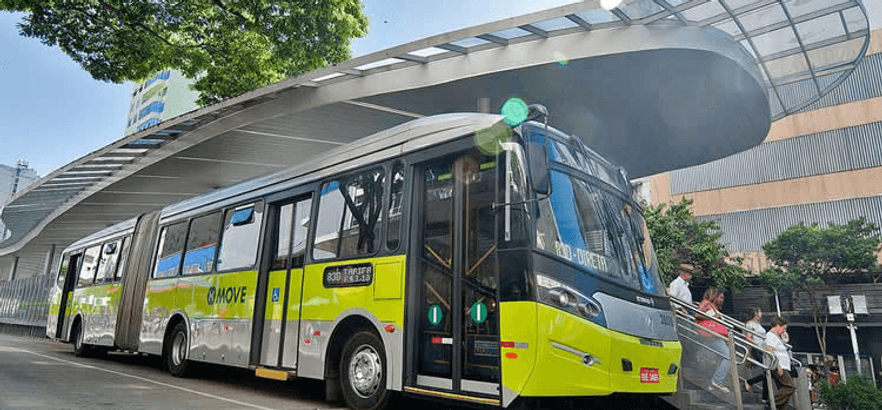

The structural element of mobility in urban centers, the bus, goes through a delicate moment in the face of the challenges of this new, troubled and transforming scenario experienced by mobility.
All parameters of feasibility, cost, operation etc. must be reevaluated and, in parallel, new possibilities for equipment and applications must be considered when creating a new model for the system. The integration of these possibilities is a technical imperative to be faced and addressed.
In smaller cities, the maintenance of this system is not feasible in the current way, but the public transport service can even be improved, with the use of adequate legal modeling, with the use of applications that not only improve the quality of the service provided, but also represent a certain income for these service providers, residents of the city.
At the other extreme, cities with a more significant size, public transportation served by vehicles of greater capacity (buses, BRT etc.) is essential, under penalty of losing the efficiency of the city and its economic / social environment. However, it is necessary to rethink its design, with the perspective of establishing, whenever possible, trunking, the establishment of priorities for the bus in the main stretches of the road system and the integration with the new modes at the ends of the itinerary, reducing operating costs and investment. Use the best that each mobility participant can give. Make the transport system and the City sustainable.
Services:
-
Current Diagnostic Report.
-
Traffic Circulation Study.
-
Demand and Layout of Routes Study.
-
Capacity study of signalized intersections.
-
Impact Study on Circulation generated by the redistribution of traffic volumes at the intersections of the surroundings.
-
Micro-simulation of traffic networks (vehicles and pedestrians).
-
Analysis of traffic signal programming.
-
Elaboration of Performance Report with evaluation, such as delays, number of stops, average speed, degree of saturation, service level, travel time, length of queues, volume / capacity ratio, emission of pollutants, fuel consumption.
-
Elaboration of Technical Advice, containing qualitative and quantitative evaluation of the proposed project alternatives and the definition of intervention priorities in the municipality.
-
Urban Design.
-
Landscape Design.
-
Horizontal and Vertical Traffic Signs Project.
-
Traffic Light Project.
-
Indicative Signs Project.
-
Operational Traffic Banners.